BeforeAfter
Implant replacementWith mastopexy
 Minimally invasive techniquePreservéA 2 cm micro-incision, no muscle detachment, under local anaesthesia with sedation.
Clinique Esthétique Ferrère
16 ter rue Ferrère, 33000 Bordeaux
Procedure 07
Wear after ten years, rupture, capsular contracture, or simply the wish for a different shape. Replace, adjust the pocket, or convert to fat.
Figures confirmed by the surgeon; they vary from case to case and are specified in consultation.
The essentials
Replacing breast implants is considered either for natural wear after ten years, or to improve or change a result in terms of volume, shape or contours.
The request may also stem from a change that has occurred over the years: typically a capsular contracture, an implant malposition, an asymmetry that has appeared, or skin laxity with sagging.
A revision is not a second placement: it is decided on the state of the pocket, that of the implants in place and the quality of the tissues. This assessment determines what is possible.
Round or anatomical implants can be replaced with the same or a different shape depending on the case.
The volume can be increased by 30% if you wish, or remain unchanged. Sometimes a change of pocket may be necessary, or an adjustment of that pocket.
The original incision is generally reused wherever possible: this avoids adding a scar.
A revision is also an opportunity to review an old choice in the light of the implants available today — the ranges of profiles, gel cohesiveness and texturing have evolved.
Dr Azencot has spoken on breast implant replacement at the 35th SOFCEP congress (Versailles, 2023), on the treatment of the capsule according to implant texturing at the SOFCPRE round table “Breast oncology” (2022), and on European breast implant regulations at the ESAPS workshop (Brussels, 2025), of whose board and scientific committee he is a member.
Replacement for implant rupture can be carried out in the same operation.
If the rupture occurred before ten years, a claim can be made to the manufacturer under its device vigilance scheme. It is examined case by case and covers the implants free of charge, as well as the clinic fees — according to the terms of the purchase contract for the implants with the manufacturer.
A late fluid collection around the implant, with swelling of the breast, should prompt a consultation. So should the appearance of an abnormal lymph node in the armpit. Annual follow-up, with ultrasound on request, remains the rule after ten years.
Not every revision ends with a new implant.
Partial conversion consists of injecting fat and placing a smaller implant. Total autologous conversion consists of removing the implants and injecting fat in their place. Your surgeon will advise you.
This option appeals to patients who wish to lighten their breasts, to do without a foreign body, or whose tissues have changed to the point where an implant is no longer the most suitable choice.
Total autologous conversion is often possible in a single session, injecting in the region of 450 cc of fat per breast. A second session may be needed if the implant removed was large — beyond 350 cc — or if the reserves do not allow around 1 200 cc of fat to be harvested.
Sometimes the skin of the breast has loosened over time, and an associated mastopexy may be necessary.
Fat transfer can be used around the implants to enhance the cleavage or to camouflage the contours of the implant. It is the same procedure as in composite augmentation, applied here to breasts that have already been operated on.
Frequently asked questions
These answers reflect the content written and validated by the surgeon. Each one is written to stand alone, question by question.
Gallery
Cases operated on by Dr Azencot, photographed before and after surgery, in front and three-quarter views. Drag to compare. The captions are the surgeon’s own.
Photographs for information only — neither a commitment nor a guarantee of result. Every situation is unique and assessed in consultation.
Meet us
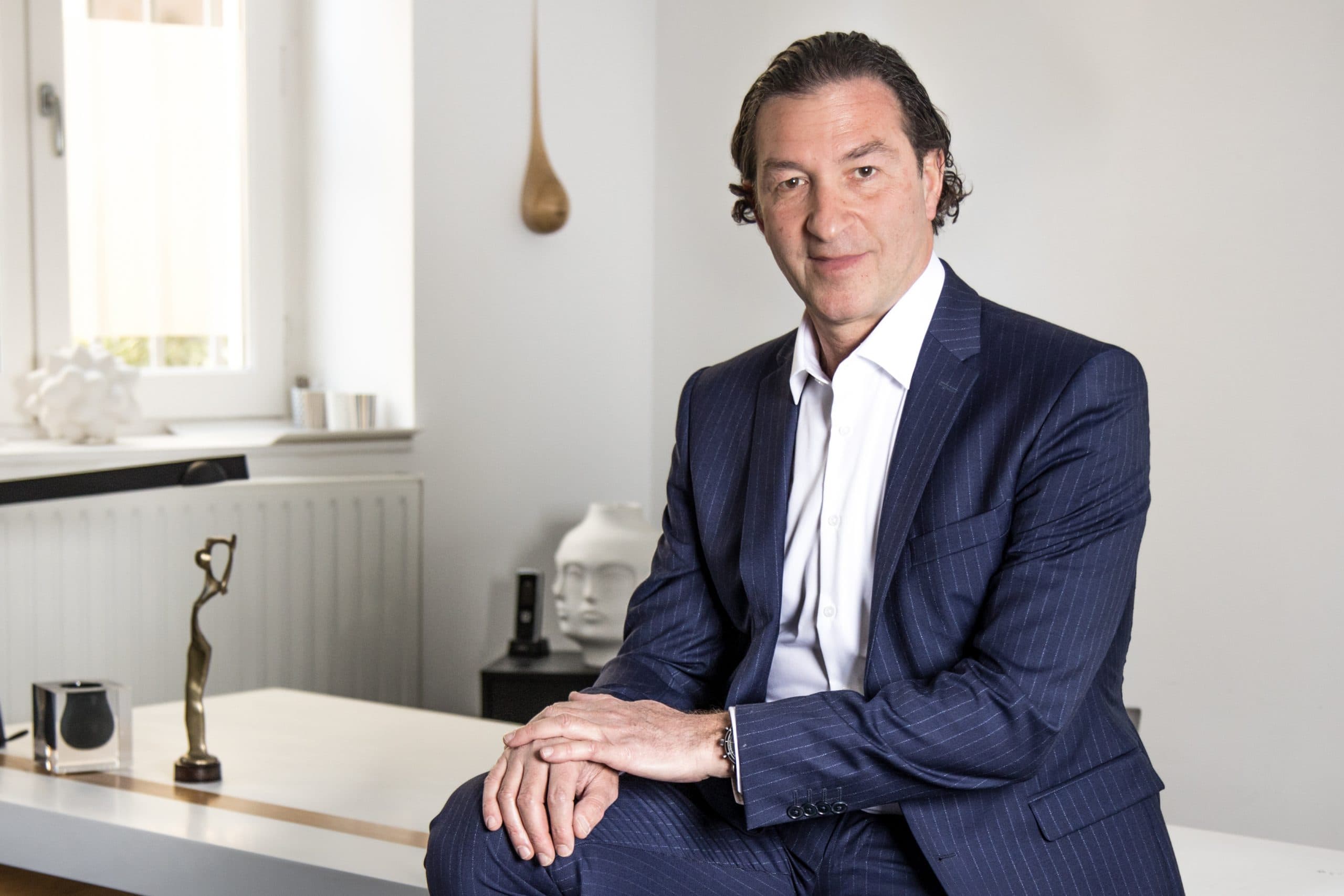
A first consultation is there to understand your request and tell you what is possible — including when the answer is that it is better to do nothing.
16 ter rue Ferrère
33000 Bordeaux
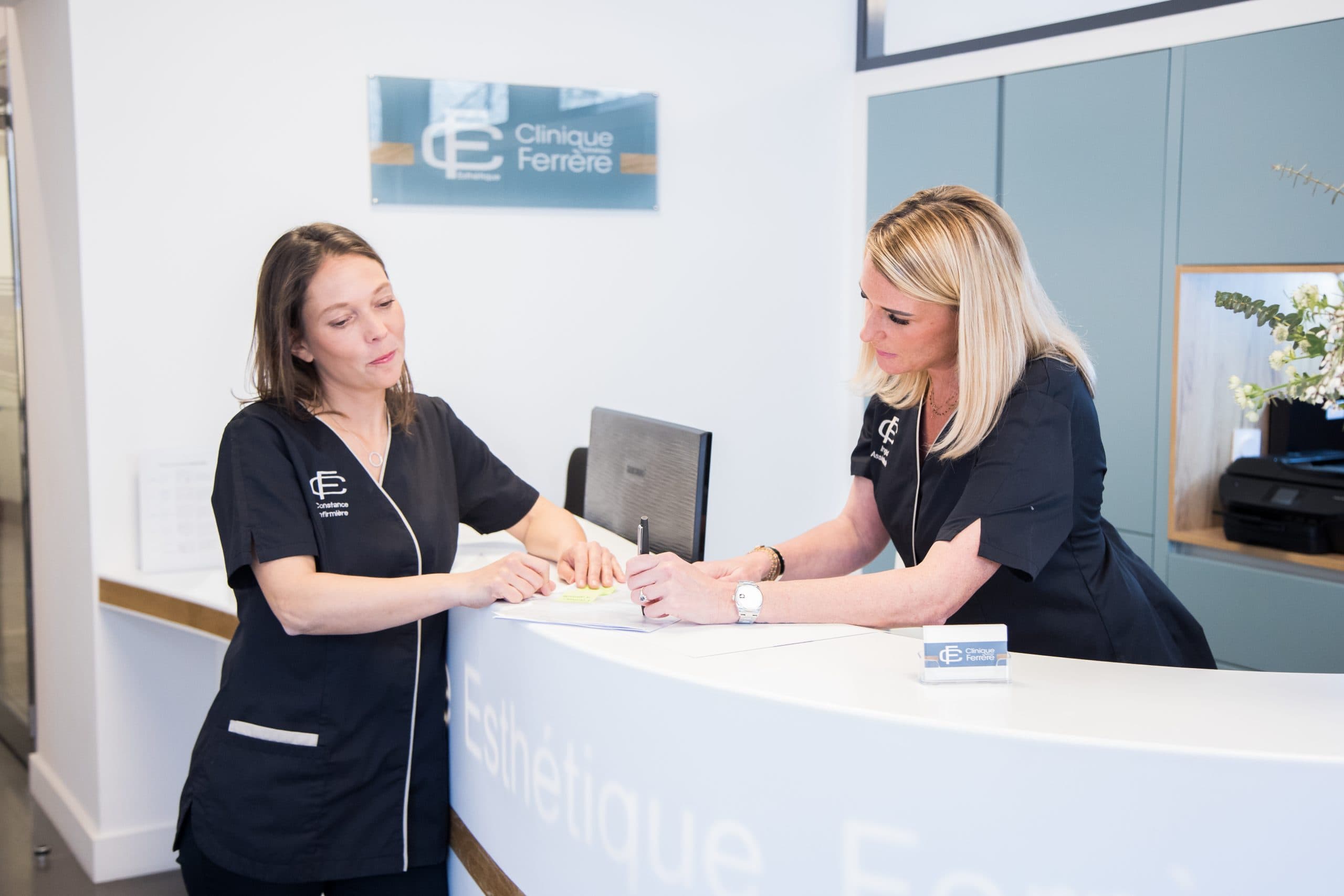
In cosmetic surgery, French law requires a detailed written quote and a cooling-off period of at least fifteen days between the consultation and the operation. No deposit may be requested during that period. Two consultations are required before any operation.