The technique
The Preservé technique
A two-centimetre micro-incision, a pocket created with an inflatable balloon without detaching the tissues, local anaesthesia with sedation. A lighter procedure, for a faster recovery.
- Duration
- 1 h
- Anaesthesia
- Local, with or without sedation
- Stay
- Day case
- Recovery
- 3 to 5 days
Figures confirmed by the surgeon; they vary from case to case and are specified in consultation.
The essentials
The four questions that come up
- What is the Preservé technique?
- A minimally invasive breast augmentation: the implant is placed through a two-centimetre micro-incision, and the pocket that receives it is created with an inflatable balloon, which preserves the surrounding tissues — hence the name of the technique.
- Where is the scar?
- Most often in the fold of the breast, for a very discreet scar. It measures two centimetres and, fine and concealed, becomes barely perceptible over time.
- Is general anaesthesia required?
- The operation can be performed under local anaesthesia with sedation, which avoids the side effects of a general anaesthetic and allows a more comfortable recovery from anaesthesia.
- How quickly do you recover?
- Recovery is fast: most patients return to their everyday activities within a few days, and can go home the same day.
An approach that combines comfort and precision
Minimally invasive breast augmentation is characterised by a modern approach that combines comfort and precision. Thanks to Motiva’s new generation of Preservé implants, it is now possible to obtain a harmonious result with a simpler, less painful operation and a much faster recovery, even allowing discharge from hospital the same day.
The name comes from the procedure itself: the pocket intended for the implant is created with an inflatable balloon, which preserves the surrounding tissues instead of detaching them.
Minimally invasive surgery for a fast recovery
Minimally invasive breast augmentation allows the implant to be placed through a micro-incision of only two centimetres, most often made in the fold of the breast for a very discreet scar.
The pocket for the implant is created with an inflatable balloon, which preserves the surrounding tissues and explains the name of the Preservé technique.
The implant is introduced using an insertion sleeve called a Keller funnel, a sterile device that eases the passage of the implant while preserving the tissues. This technique reduces post-operative pain and considerably lowers the risks of inflammation or bleeding.
The operation can be performed under local anaesthesia with sedation, which avoids the side effects of a general anaesthetic and allows a more comfortable recovery from anaesthesia. Recovery is fast: most patients return to their everyday activities within a few days.
Local or general anaesthesia
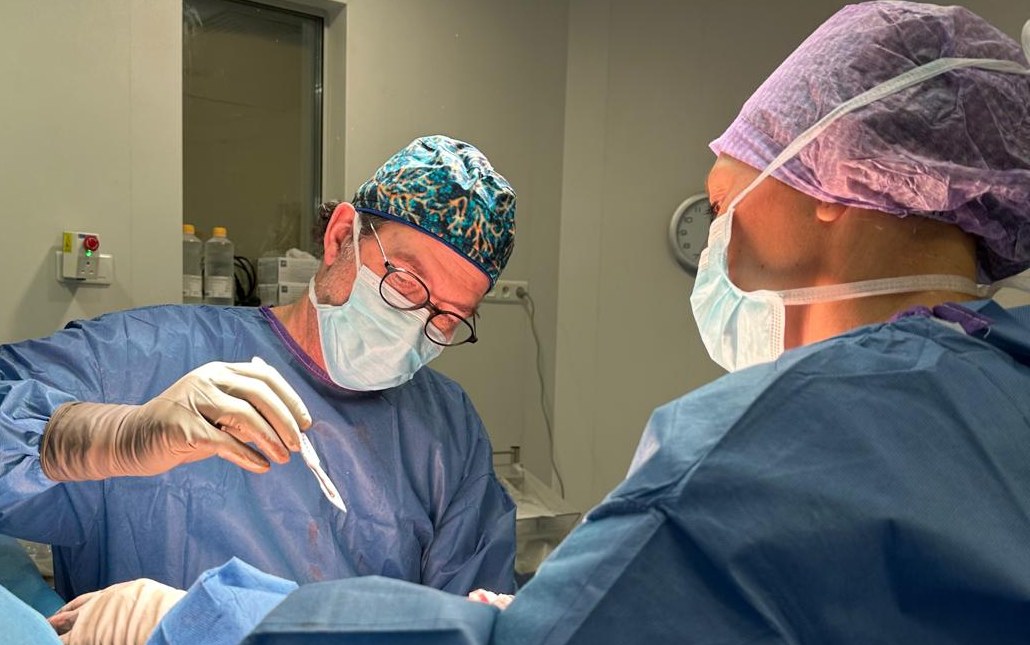
Standard breast augmentation is performed under general anaesthesia. The Preservé technique can be performed under local anaesthesia, with or without sedation.
Local anaesthesia avoids the side effects of general anaesthesia, and avoids waking up from it, which can be uncomfortable. Discharge is on the same day. Most patients resume their daily activities within three to five days.
The type of anaesthesia is agreed between the doctor and the patient: pure local anaesthesia, or local anaesthesia assisted by sedation given by the anaesthetist. The appointment with the anaesthetist, if needed, is mandatory.
What makes the procedure lighter
The incision is two centimetres long. The space that receives the implant is created with an inflatable balloon, under the gland, without detaching the tissues. The implant is introduced using a sterile insertion sleeve called a Keller funnel. This reduces post-operative pain and lowers the risk of inflammation and bleeding. The space is created from the centre of the breast with the balloon, which respects the circumferential ligament, a guarantee of stability over time.
Not every breast is suited to it
Preservé implants go up to 320 cc. The desired volume, skin quality and tissue thickness determine the indication. And when a request for augmentation comes with ptosis, augmentation alone is not enough: the ptosis must also be corrected, with a mastopexy. The clinical examination decides.
An innovative implant technology
Implants suited to your morphology
Preservé implants incorporate the latest advances in Motiva research. Their silicone gel, soft and stable, adapts naturally to the movements of the body for a particularly natural look.
These implants are available in every volume up to 320 cc, allowing an augmentation perfectly suited to each patient’s morphology.
Dr Azencot took part in the first Preservé symposium, held with the 9th World Symposium on Ergonomic Implants in Šibenik, Croatia, in September 2025: minimally invasive implants through a two-centimetre incision, under local anaesthesia.
Natural and discreet results
The aim of this method is to restore volume to the breasts while preserving their movement and softness.
The breast remains soft, mobile and harmonious, without a fixed appearance. The scar, fine and concealed, becomes barely perceptible over time.
This minimally invasive approach offers a modern alternative to traditional breast surgery: a lighter, faster and better tolerated operation, for a result that is both aesthetic and natural.
Not every breast is suited to this technique: the volume wished for, the quality of the skin and the thickness of the tissues determine the indication. The clinical examination retains it or sets it aside, in favour of another incision.
Frequently asked questions
What patients ask
These answers reflect the content written and validated by the surgeon. Each one is written to stand alone, question by question.
Is the scar really smaller?
Why is the technique called Preservé?
What is the insertion sleeve for?
Can I go home the same day?
Do I need someone to accompany me?
Up to what volume?
Is this technique suitable for every case?
Can fat transfer be combined with the Preservé technique?
Which implants are used?
In which plane is the Preservé implant placed?
What is the aim of the technique?
How long does the operation take?
When can I resume sport and carrying loads?
Has the surgeon trained in this technique?
Can breast augmentation be done under local anaesthesia?
What are the advantages of local anaesthesia?
Who decides the type of anaesthesia?
Can I choose general anaesthesia?
Is the operation painful?
Does it hurt during the operation? Am I conscious under local anaesthesia?
Why is recovery faster?
How does it differ from standard breast augmentation?
How much does a breast augmentation with the Preservé technique cost?
Is the technique suitable if my breasts sag?
What tests are needed before the operation?
Glossary
The words on this page
The terms used here, each defined in a sentence in the site’s glossary.
Meet us
Consultation
A first consultation is there to understand your request and tell you what is possible — including when the answer is that it is better to do nothing.
Clinique Esthétique Ferrère
16 ter rue Ferrère
33000 Bordeaux
Write to the practice
A question before booking a consultation?
Your message goes directly to Dr Azencot’s office.
In cosmetic surgery, French law requires a detailed written quote and a cooling-off period of at least fifteen days between the consultation and the operation. No deposit may be requested during that period. Two consultations are required before any operation.